Ethereum Application Gathering Highlights the Next Chapter for Ethereum Applications (Part I)
The “Ethereum Applications Gathering,” hosted by the Ethereum Applications Guild (EAG), was held on April 22 on the Main Stage of the Hong Kong Web3 Festival in Hong Kong. This gathering brings together people working across different layers of the stack to share recent progress, compare perspectives, and surface practical insights from what’s being built today.
As Ethereum infrastructure continues to mature, the focus is increasingly shifting toward applications. Rather than focusing on narratives, the conversations center on real signals — where momentum is forming, what challenges remain, and how applications are beginning to take shape in practice.
During the event, the Ethereum Applications Guild (EAG) was officially launched as a non-profit organization. By collaborating with diverse stakeholders across the ecosystem, EAG is building a global network dedicated to open collaboration, shared infrastructure, and the long-term sustainability of the Ethereum application layer.
The event centered on four thematic chapters, beginning with the evolution of Ethereum’s infrastructure and application layer, and extending into frontier areas such as real-world applications, AI agents, institutional adoption, and autonomous hardware systems.
The event centered on four thematic chapters, beginning with the evolution of Ethereum’s infrastructure and application layer, and extending into frontier areas such as real-world applications, AI agents, institutional adoption, and autonomous hardware systems. Together, these discussions provided an overview of the ongoing transformation of the Ethereum application layer, while also reflecting builders’ perspectives, insights, and practical explorations of the ecosystem’s next phase. The following are the key insights shared by the speakers.
Dr. Xiao Feng: “Ethereum’s 1995 Moment” Has Arrived, Application Explosion Is Accelerating
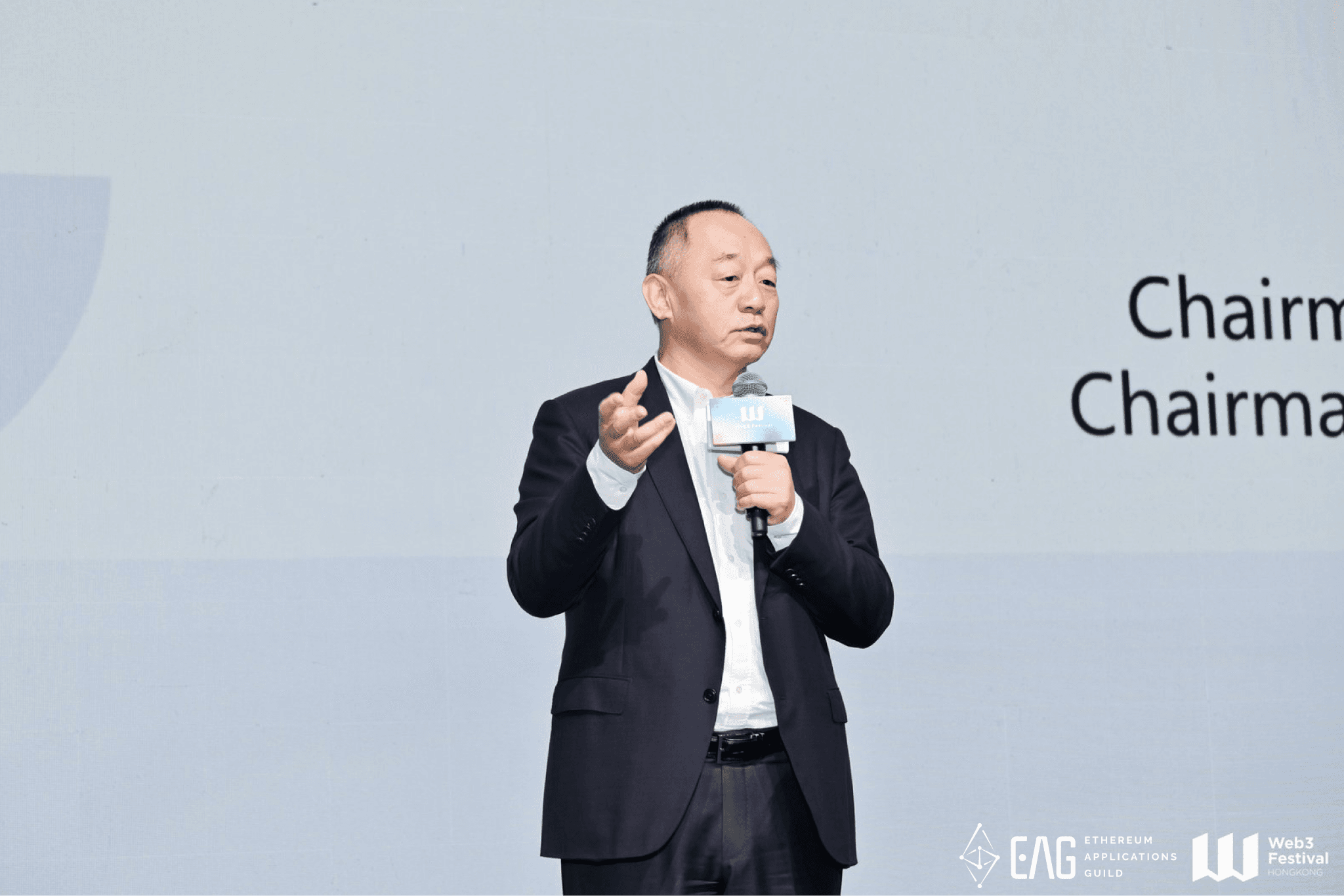
Dr. Xiao Feng, Chairman of Wanxiang Blockchain, Chairman and CEO of HashKey Group, stated in the opening keynote that blockchain has entered its “1995 moment,” signaling the beginning of rapid acceleration toward large-scale application adoption. He compared the current stage of blockchain development to the early internet era, when core infrastructure, developer tools, and supporting technologies reached maturity, laying the foundation for large-scale commercialization.
He further highlighted ecosystem initiatives such as the “ShanHaiWoo” developer programs, which have evolved into a global builder network, and emphasized the convergence of blockchain with AI and privacy computing. Technologies like zero-knowledge proofs and encryption, he noted, are now mature enough to support real-world applications, enabling new data-driven economic models built on Ethereum’s trustless infrastructure.
Aya Miyaguchi: Advancing Ethereum Through the “Principle of Subtraction”
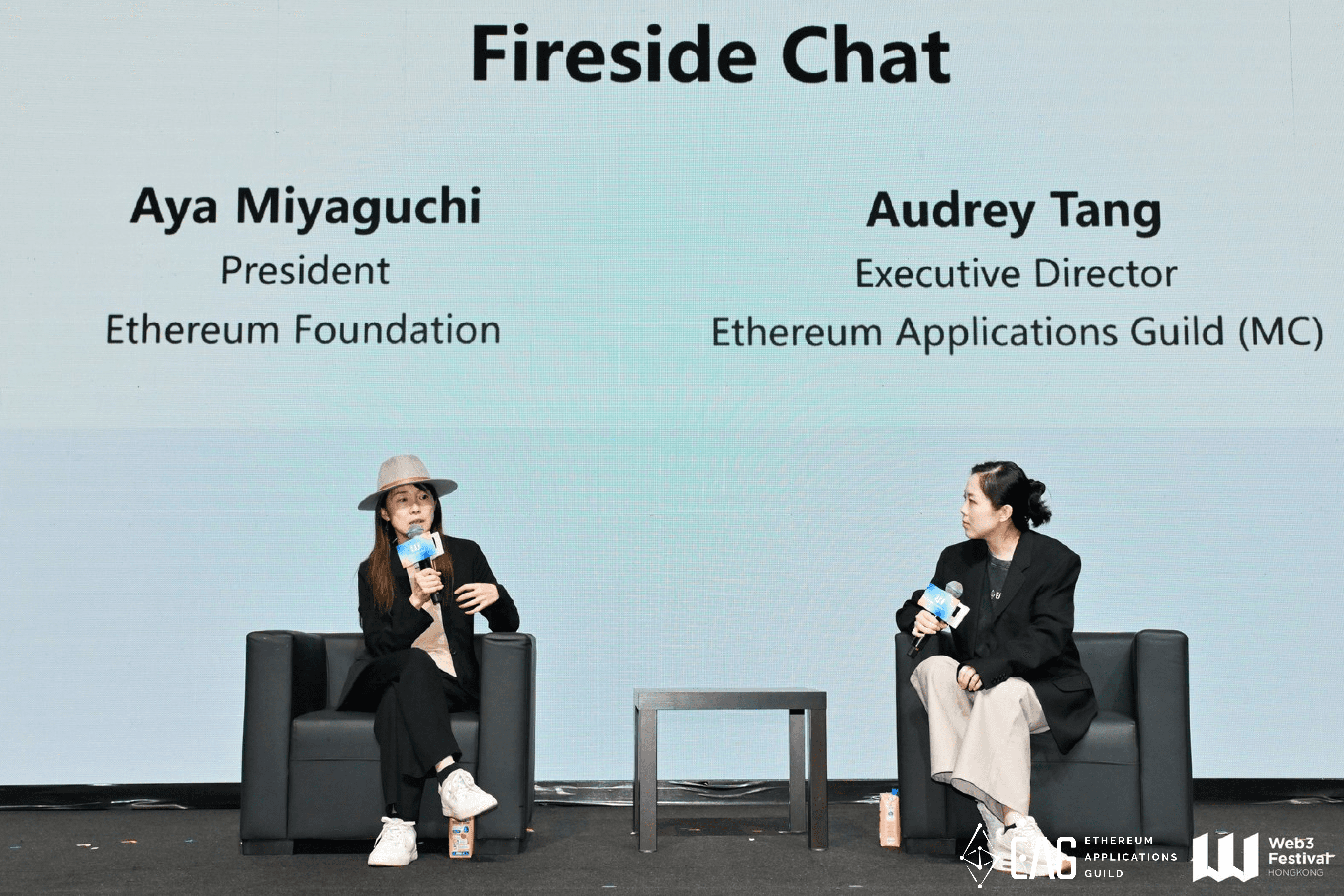
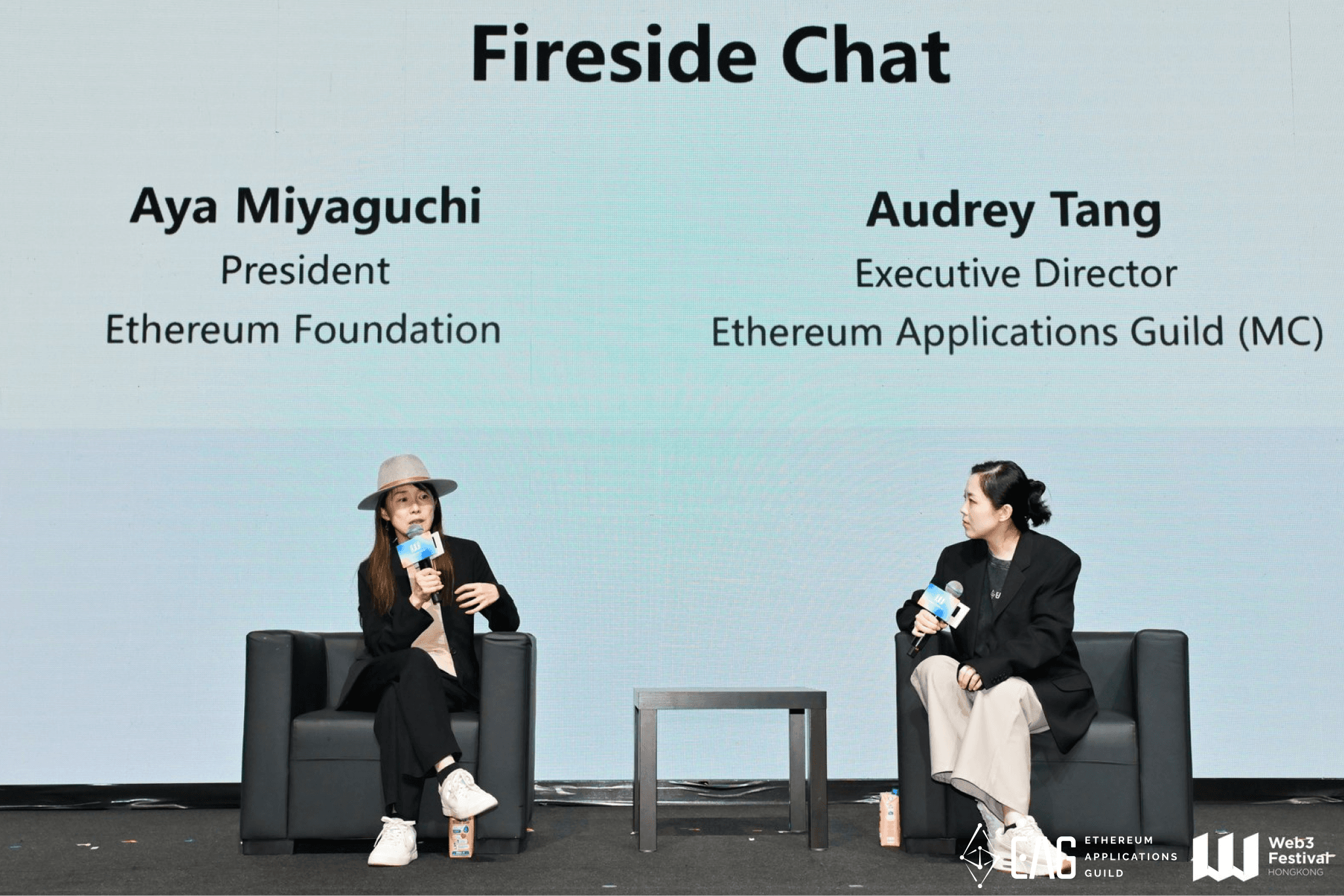
Aya Miyaguchi, President of the Ethereum Foundation, joined Audrey Tang, Executive Director of the Ethereum Applications Guild (EAG), for a fireside chat on Ethereum ecosystem governance, application development, and the evolving role of the Foundation.
Aya explained the "Principle of Subtraction" in the EF Mandate, which encourages the Foundation to come in only when the EF is needed. This means the EF increasingly shifts toward a supportive role in areas that are already relatively mature or where the community has sufficient capability, such as wallets and client implementations, allowing natural competition to produce better solutions. She described the EF's role as being "one of many" gardeners in the ecosystem.
She noted that “real applications” are typically grounded in Ethereum’s core values, including censorship resistance, open source, security, and privacy. She highlighted security as a foundation for meaningful adoption, and pointed to the importance of long-term resilience over short-term incentives, with the idea that Ethereum should be able to pass the “walkaway test” and sustain themselves over a decade or more.
She also highlighted the importance of a “local-first” strategy, noting that organizations like EAG can leverage deep regional ecosystems to generate global impact.
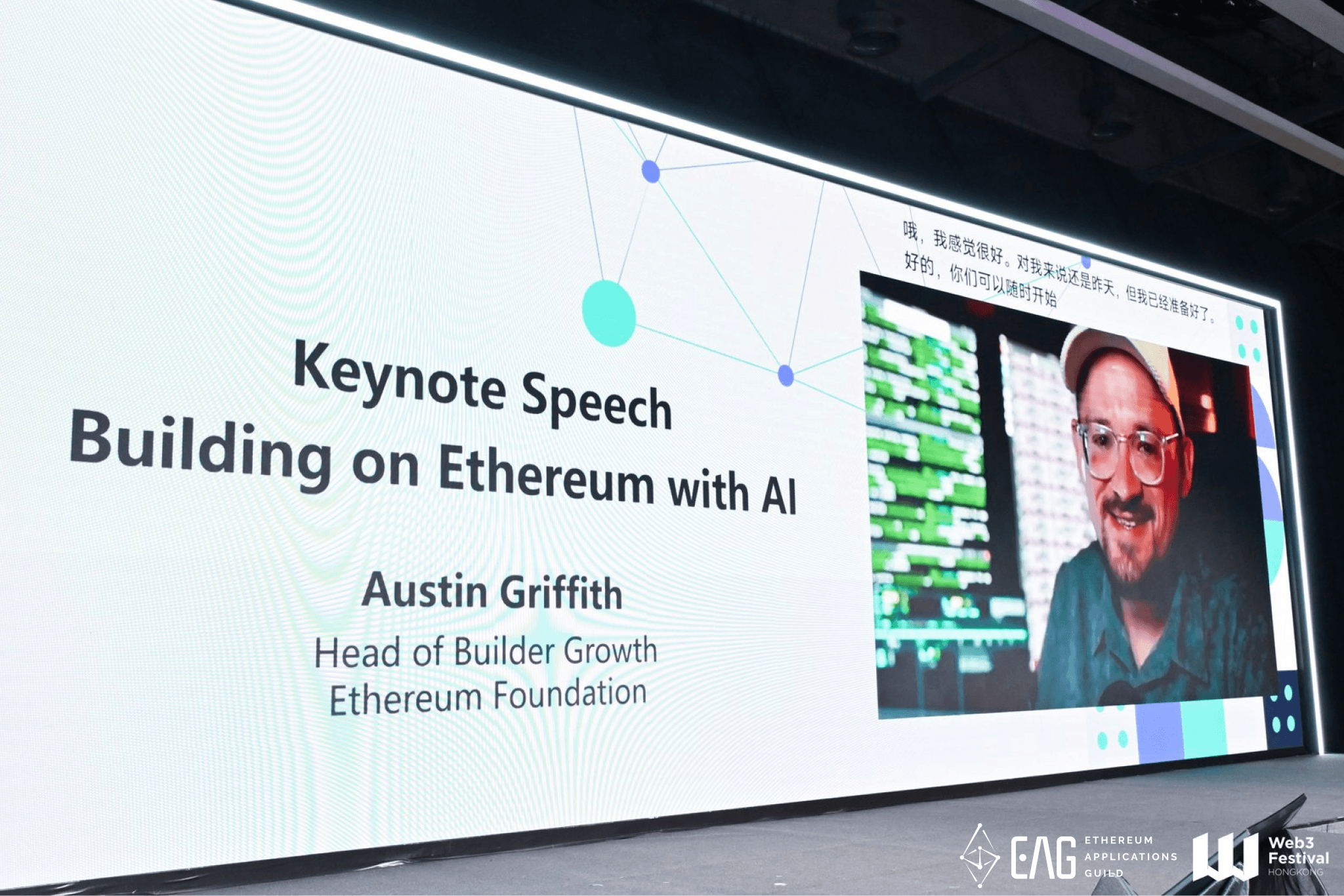
Austin Griffith: Building on Ethereum with AI
Austin Griffith, Head of Builder Growth at Ethereum Foundation, redefined his role from “developer growth” to “builder growth.” He argued that with the rise of AI tools, syntax is no longer a barrier, builders with good ideas can now directly create products. He outlined the evolution of AI-assisted development, from conversational coding to integrated tools like Cursor, Claude Code, and one-shot application generators (Opus 4.5).
To address AI’s knowledge gap in blockchain, he introduced ethskills.com, a set of markdown-based skill files that provide AI systems with Ethereum-native context, enabling them to understand deployment and debugging workflows.
Looking ahead, Austin emphasized the rise of AI agents in finance. He highlighted the importance of multisig wallets and passkeys for securing AI agents and envisioned a future where multiple agents collaborate via on-chain protocols such as ERC-8004, forming a reputation and payment-driven economy.
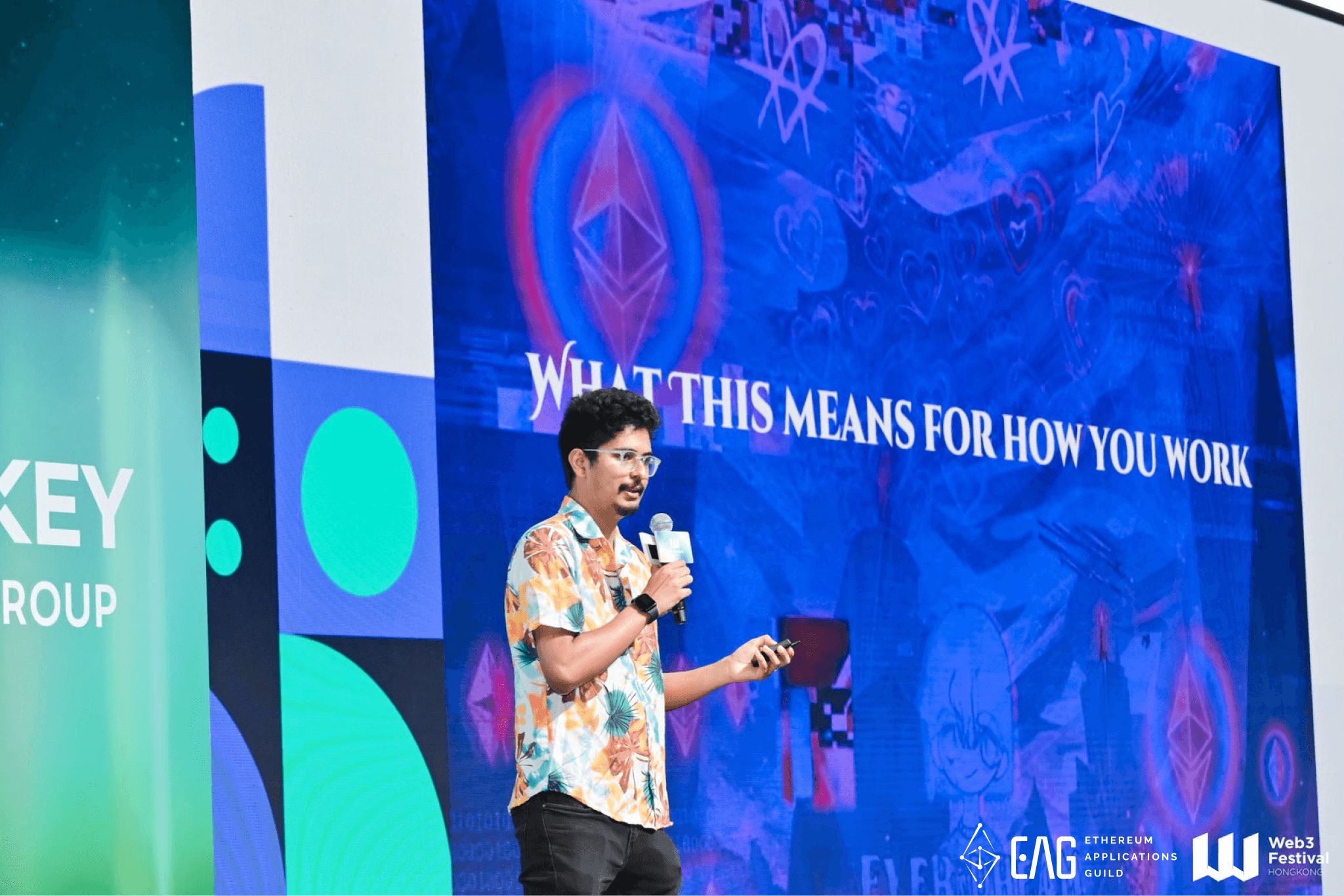
Shyam Sridhar: Ethereum as Infrastructure for Deep Self-Sovereignty
Shyam Sridhar, Team Lead, Academic Secretariat at Ethereum Foundation, discussed Ethereum as a foundation for “deep self-sovereignty.” He pointed out that traditional systems often contain “backdoors” controlled by centralized authorities, whereas blockchain eliminates this by design through cryptography.
However, sovereignty cannot be guaranteed at the protocol layer alone, it depends on the integrity of the entire tech stack. He called for interdisciplinary collaboration to ensure sovereignty extends from protocols to applications, without being undermined by centralized RPC layers or opaque components. He also emphasized open source and forkability as essential guarantees of user exit rights.
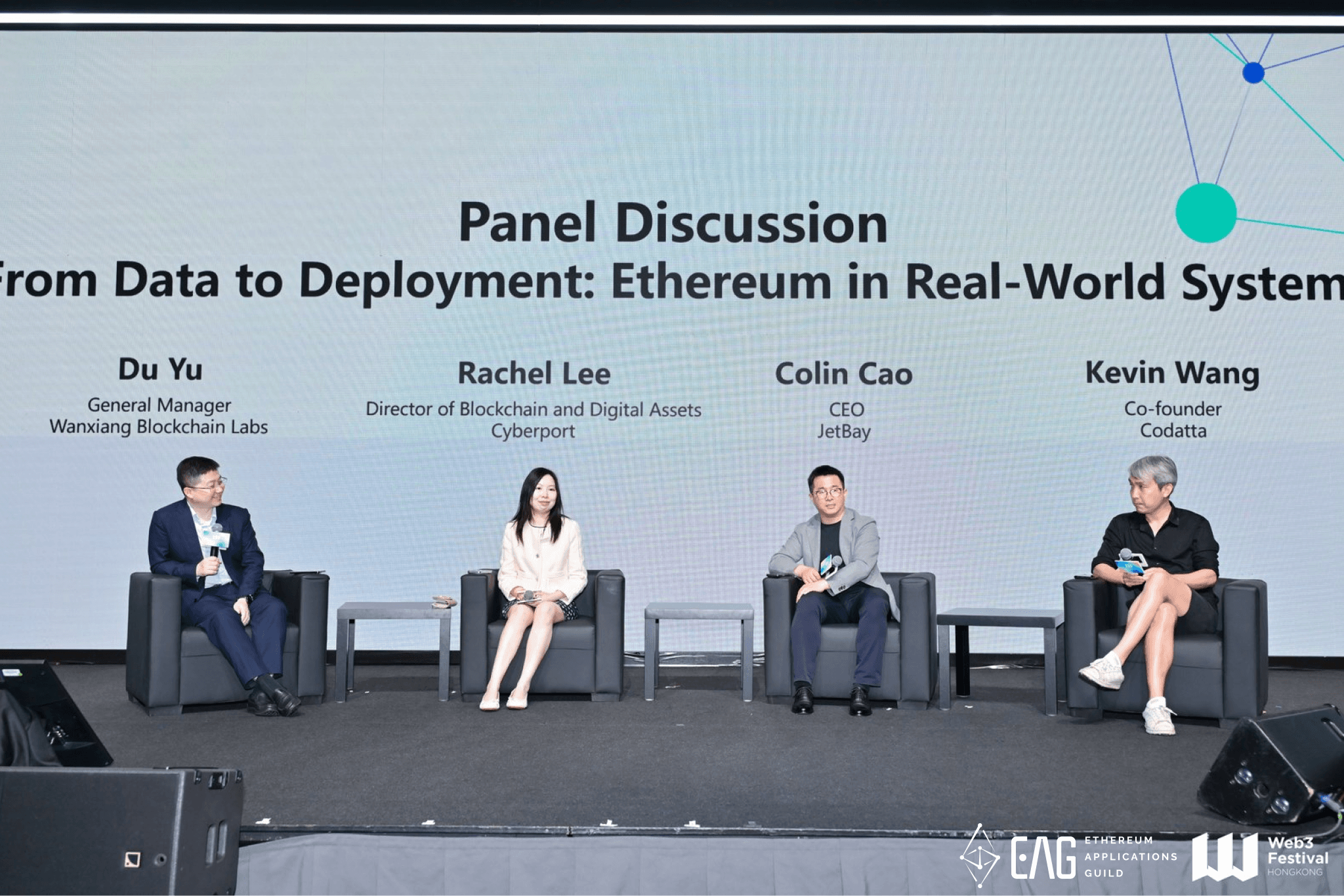
From Data to Deployment: Ethereum in Real-World Systems
In this panel discussion, speakers explored the integration of Web3, AI, and industrial data infrastructure.
Moderator Du Yu, General Manager at Wanxiang Blockchain Labs noted that the core question is how Ethereum can support non-financial real-world applications. He emphasized that while AI requires data infrastructure, Web3 can provide solutions for data ownership, value distribution, and cross-institution coordination. However, challenges remain in UX, identity, security, and regulation.
Rachel Lee, Director of Blockchain and Digital Assets at Cyberport highlighted the rapid growth of Hong Kong’s Web3 ecosystem and the emergence of DID, AI wallets, and stablecoin payments, while noting UX and compliance remain key barriers.
Colin Cao, CEO of JetBay emphasized aviation as a data-heavy industry where Web3 can improve efficiency through tokenized operational data and more efficient settlement systems.
Kevin, Co-founder of Codatta focused on AI training data ownership, arguing that blockchain enables traceability and continuous revenue distribution for data contributors, particularly in robotics and real-world data infrastructure.
Community Demo Show: Innovative Ethereum Native Applications
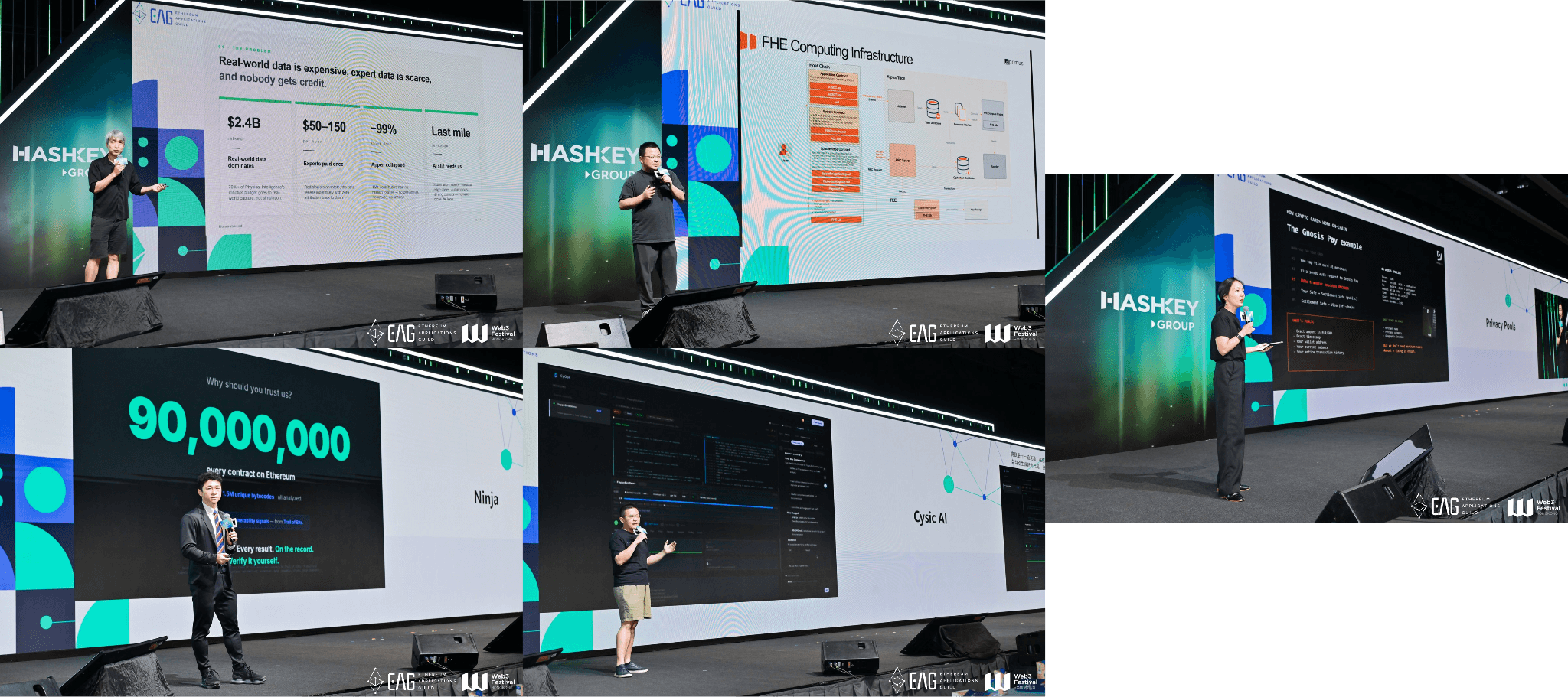
The Demo Show featured five projects across AI, privacy, security, and agent systems:
Humanbased addressed unfair data monetization in AI training by tracking dataset provenance and rewarding contributors via blockchain-based royalty systems.
Primus introduced a zkTLS and FHE-based privacy layer enabling verifiable yet private financial computation with auditability.
Ninja developed an AI-powered transaction risk analysis tool to protect users from phishing and malicious contracts.
Cysic AI demonstrated fully autonomous AI agent teams capable of building and deploying applications in hours without human intervention.
Privacy Pools showcased zero-knowledge-based private transactions that preserve compliance while breaking transactional linkability.